
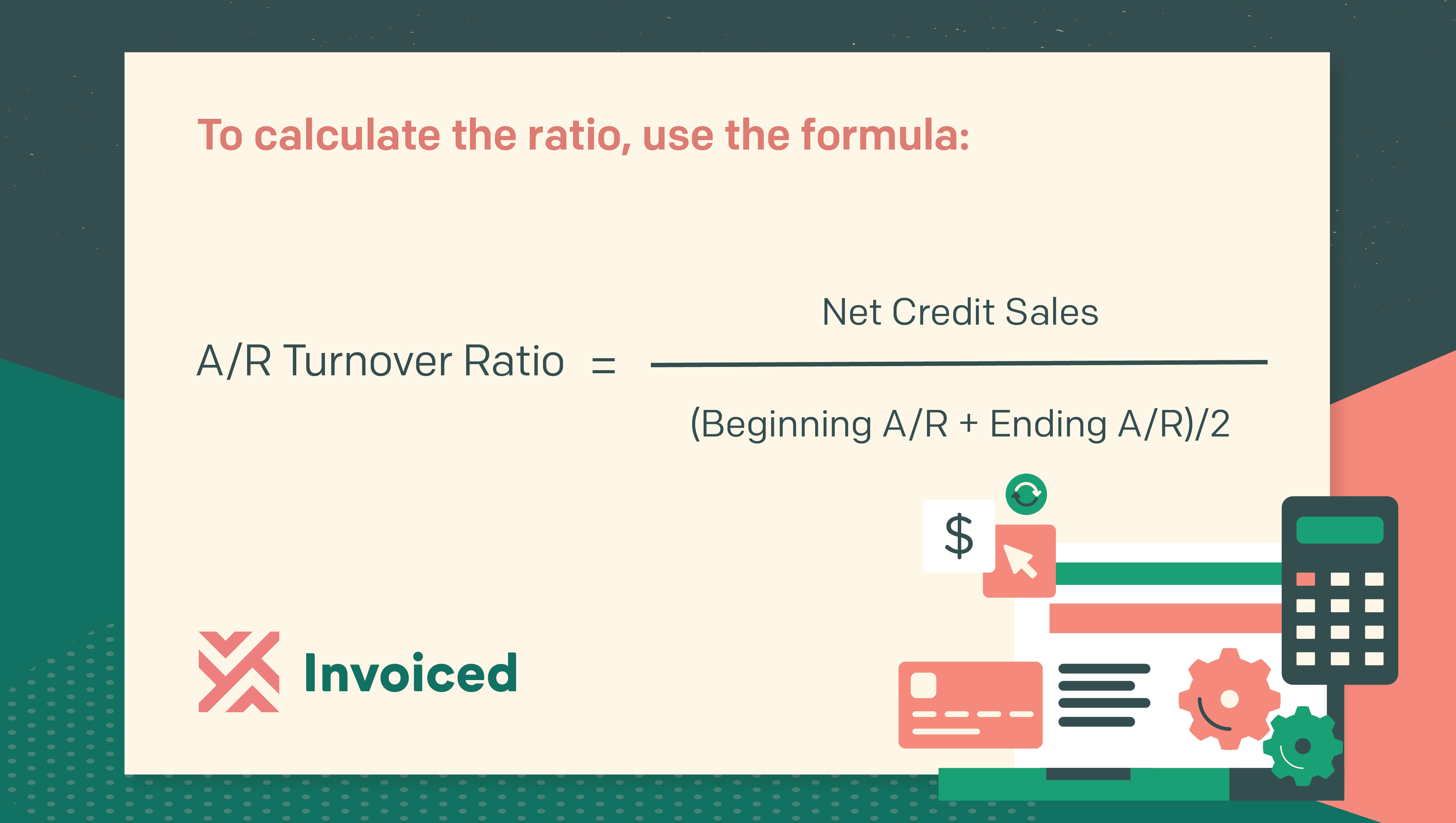
The ratio does not account for qualitative aspects like the quality of the supplier relationship or the nature of goods and services received. Strong supplier relationships can lead to more favorable payment terms, affecting the ratio independently of financial considerations. A high ratio suggests that a company is collecting payments from customers quickly, indicating effective credit management and strong sales.
Cash Flow Misinterpretation
It means the company has plenty of cash available to pay off its short-term debts in a timely manner. This can indicate that the company is managing its debts and cash flow effectively. Because accounts payable turnover measures the number of payments over an average payables balance, longer time periods tend to have a higher AP turnover ratio. Your accounts receivable turnover ratio is also an element that will have an impact on your company’s accounts payable turnover ratio. Based on the average number of days in the turnover period, DPO is a different view of the accounts payable turnover ratio formula.
Improving Accounts Payable Turnover Ratio: Examples and Formula
Accounts payable automation eliminates manual data henry which saves time and protects valuable assets of your company. AP automation offers features such as secure payment, straightforward online approvals, and a clear audit trail that help the AP process to be more streamlined and time efficient. To calculate your accounts payable turnover ratio, you’ll need to know your starting and ending AP balance. Because public companies have to report their financials, you can follow the AP turnover and other metrics of industry leaders to see how your own business compares. This can help you improve your company’s financial health and even identify strategic advantages you might be able to leverage for greater success.
Importance of Your Accounts Payable Turnover Ratio
A significantly higher or lower ratio than industry averages may warrant further investigation into the company’s payment practices, supply chain efficiency, or financial strategy. Accounts payable is short-term debt that a company owes to its suppliers and creditors. The accounts payable turnover ratio can reveal how efficient a company is at paying what it owes in the course of a year. They offer timely and accurate financial data which lets businesses predict their cash needs better.
Sample Resume with Accounts Payable Resume Summary
The formula can be modified to exclude cash payments to suppliers, since the numerator should include only purchases on credit from suppliers. However, the amount of up-front cash payments to suppliers is normally so small that this modification is not necessary. The cash payment exclusion may be necessary if a company has been so late in paying suppliers that they now require cash in advance payments. For instance, if a company’s accounts receivable turnover is far above that of its peers, there could be a reasonable explanation. However, it is rarely a positive sign, i.e. it typically implies the company is inefficient in its ability to collect cash payments from customers.

Just remember to pay attention to the time period so you can calculate the AP turnover for the same period. Companies that have busy AP departments with many bills and payments often start by looking at their AP turnover over a 5-day or 10-day period. Evaluating the AR turnover ratio can help you determine if delays in collections are having an impact on your ability to cover expenses. The Days payable outstanding should relate reasonably to average credit payment terms stated in the number of days until the payment is due and any early payment discount rate offered. That’s why it’s important that creditors and suppliers look beyond this single number and examine all aspects of your business before extending credit. But as indicated earlier, a high turnover ratio isn’t always what it appears to be, so it shouldn’t be used as the sole marker for short-term liquidity.
- Comparing average ratios helps assess a company’s payables management relative to others in the same industry, keeping in mind that industry norms can vary.
- Accounts payable (AP) turnover measures how fast a company pays its bills, used by both finance teams and lenders as an indication of financial health.
- Businesses can customize tolerance ranges to ensure that unmatched invoices are only paid with the appropriate authorization.
- A change in the turnover ratio can also indicate altered payment terms with suppliers, though this rarely has more than a slight impact on the ratio.
- Not only can this help reduce the costs you incur as a result of accounts payables but it can also help improve your AP turnover ratio by reducing the amount of credit you have to process.
Enthusiastic candidate with a keen interest in finance and accounting, seeking an entry-level Accounts Payable position. By incorporating these components, your Accounts Payable resume summary will effectively capture the attention of hiring managers and set the stage for a compelling application. If your AP turnover target is lower than your ratio today, you’ll need to pay your what is the accounting cycle steps and definition bills more slowly. It’s important to make those decisions carefully, putting a system in place to decide which bills you can afford to pay later and which you can’t. Vendor data systems are a boon for accounting departments that struggle with huge amounts of vendor or supplier information. If you don’t have enough cash available your ability to pay bills will definitely suffer.
The reliability of the AP turnover ratio hinges on the accuracy of financial data. Inconsistent accounting practices, errors in recording transactions, or changes in accounting policies can lead to fluctuations in the ratio, making it a less reliable indicator. He has a CPA license in the Philippines and a BS in Accountancy graduate at Silliman University. Remember to include only credit purchases when determining the numerator of our formula. Cash purchases are excluded in our computation so make sure to remove them from the total amount of purchases.
One important metric you should track to gauge the health of your accounts payable process is the accounts payable turnover ratio. In this guide, we’ll break down everything you need to know about the accounts payable turnover – from what it is to – how to calculate and improve it. A high Accounts Payable Turnover Ratio is an indication of a company’s financial health and creditworthiness. Lenders, investors, and creditors use the ratio as a key indicator when evaluating a company’s creditworthiness. A high ratio indicates that a company is managing its creditors effectively and is more likely to have access to credit and financing on favorable terms. Technology can play a critical role in streamlining the accounts payable process and improving the Accounts Payable Turnover Ratio.
Because AP turnover is the ratio of your accounts payable payments to your average accounts payable balance over a given time period, the word “ratio” is technically redundant. Errors in processing accounts payables can be another reason why your business may not have a good accounts payable turnover ratio. Supplier relationships are integral to the accounts payable processes of your business. Effectively managing them can get you deals, offers, and discounts on accounts payables which in turn can help improve your AP turnover ratio.